
Concept:

image Courtesy of Acrylicize ltd
Materials + TechMaterials + Tech
1970 x Acrylic rods, Dibond , Aluminium , 1970 x individual led pixels, sound reactive generative visuals.
Brief
A giant wall-mounted speaker also serves as a visual canvas. It listens to its surroundings, from live music to street sounds and transforms the energy, rhythm, and tone of the audio into real-time generative visuals. These visuals ripple, pulse, and shift across the speaker’s surface in sync with the sound, turning audio into living motion.
Client
Acrylicize for Spotify
Year
2019
Location
Stockholm - Regeringsgatan
Acrylicize commissioned us to build a 1.8-meter-diameter interactive lighting installation for Spotify’s Stockholm office—an artwork that would visually respond to music in real time. The concept drew inspiration from the form of a speaker cone, with a dome built from 1,970 individually cut acrylic rods. Each rod was positioned at a unique height to create the curved profile, acting as an optical fibre that carried light from LEDs embedded within the structure.
It was a sculptural piece, but also a highly technical one, where visual performance depended on both precision fabrication and fast, reliable audio-reactive rendering.
What We Were Working With
The design came with a set of challenges we needed to solve:
Achieving bright, consistent light transmission through nearly two thousand acrylic rods
Generating visuals that reacted instantly and smoothly to live audio
Providing an intuitive way for the end user to select and control animations
These factors meant we needed to rethink both our approach to LED mapping and our real-time graphics pipeline.
How We Made It Work
We cut, carefully sanded the ends and positioned 1,970 acrylic rods, each at a precise length to create the dome’s curvature. The rods acted as light guides, carrying illumination from individually addressable LEDs housed inside the structure. The base was engineered from Dibond and aluminium for rigidity and easy access during maintenance.
Real-Time Sound-Reactive Visuals
We initially mapped the LEDs using MadMapper, testing with its built-in audio-reactive visuals. While functional, the system introduced a noticeable delay that broke the illusion of direct responsiveness, it was also limited in terms of the animations we could use.
To solve this, we adopted Synesthesia, a VJ and shader-based software tool that allowed us to build custom GLSL-powered visual generators. This gave us:
True real-time audio reactivity
Complex, dynamic patterns
A smooth, vibrant display with no perceptible latency
User Control via OSC
To give the client full control, we developed a companion app that allowed users to select animations from any connected device. The system ran on the OSC (Open Sound Control) protocol—similar to MIDI but designed for modern networked environments—making the installation flexible, wireless, and easy to operate.
The final installation blended sculpture, optics, and responsive graphics into a single immersive object. As music played, the acrylic dome burst into motion—shifting colour, form, and rhythm with the sound. The combination of precise fabrication, shader-driven visuals, and a clean user control interface created an artwork that felt alive, immediate, and unmistakably musical.
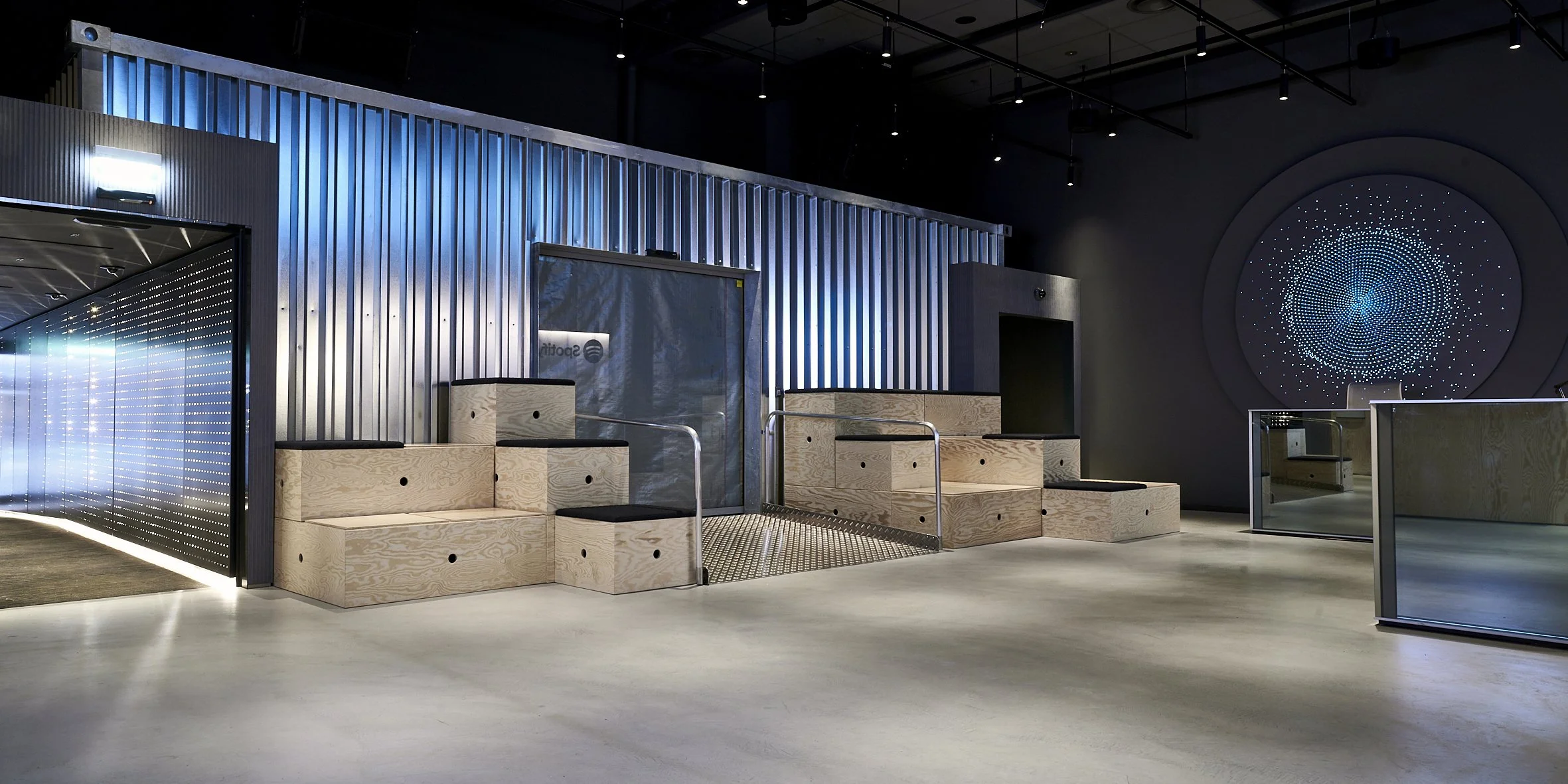
Photo Courtesy of Acrylicize Ltd

Photo Courtesy of Acrylicize Ltd
Photo Courtesy of Acrylicize Ltd
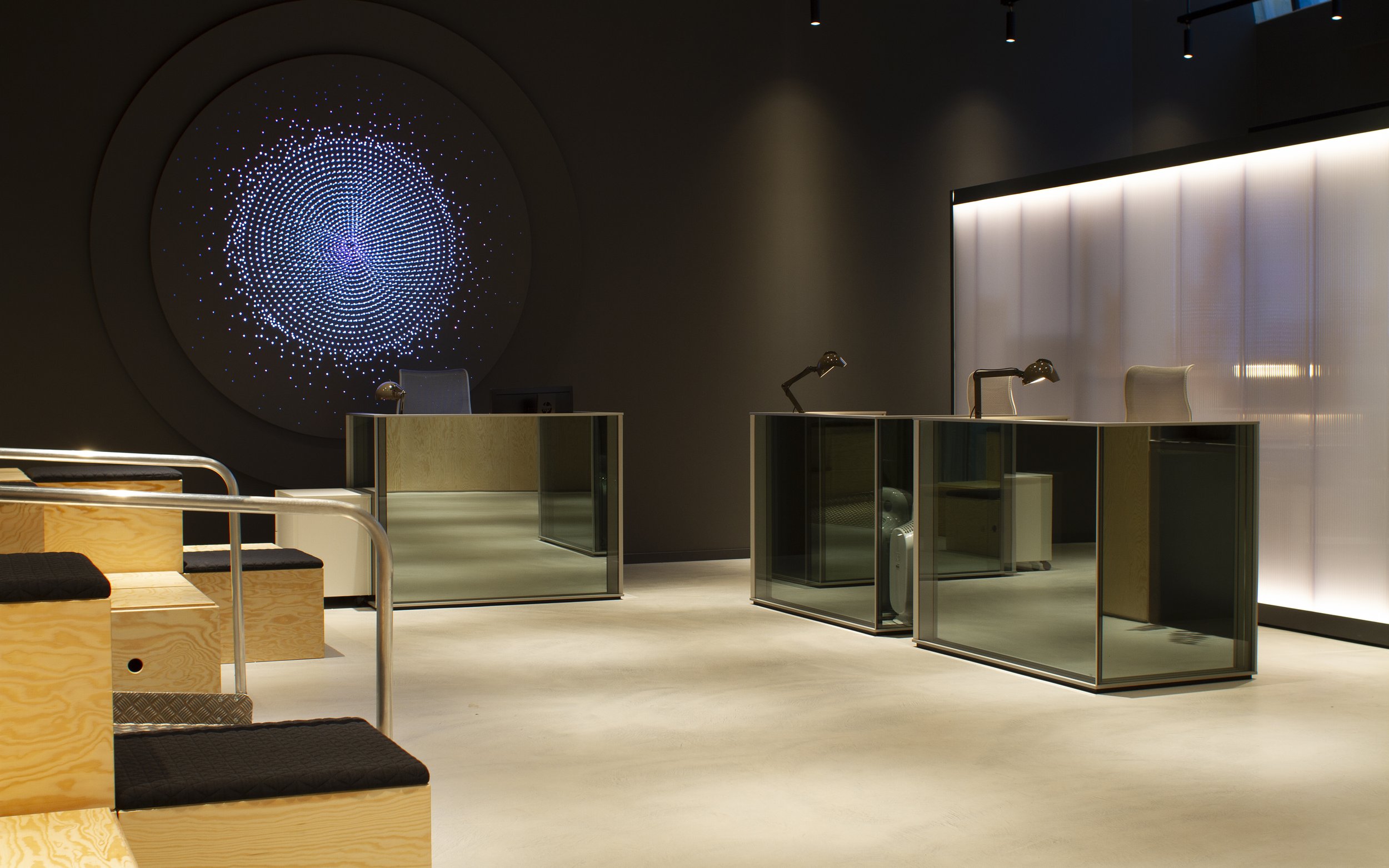
Photo Courtesy of Acrylicize Ltd

Photo Courtesy of Acrylicize Ltd


